October CPI Report: Hotter Inflation Pushes Yields to 5%
The October CPI report showed consumer prices rose 0.4%, fueling fears of more Fed rate hikes and sending the 10-year Treasury yield back to 5%.
On this page
Consumer prices rose 0.4% in October, topping Wall Street expectations and cementing the case for higher interest rates. The hotter print pushed bond yields toward multi-decade highs, rattled stock markets, and raised uncomfortable questions about whether the Federal Reserve will have to tighten policy further into 2027.
For everyday investors, this is not just an abstract macroeconomic figure. A stickier inflation reading means mortgage rates and credit card APRs are likely to stay elevated, cash in high-yield savings accounts will continue to earn solid interest, and bond prices face renewed pressure.
Here is what happened in the October CPI report, the specific numbers driving the move, and what it means for your portfolio.
What the October CPI report showed
The Bureau of Labor Statistics reported on November 10 that the Consumer Price Index increased by a seasonally adjusted 0.4% month-over-month. Economists surveyed by Dow Jones had projected a 0.3% increase. While the headline number eased from September’s 0.6% surge, underlying pressures remained stubborn.
Core CPI, which strips out volatile food and energy costs to measure underlying trends, climbed 0.3%. Forecasters had expected a 0.2% gain. This marks the third straight month of core inflation running at 0.3%, highlighting how difficult it has been to stamp out price pressures entirely.
| Metric | October 2026 Actual | Wall Street Consensus | September 2026 |
|---|---|---|---|
| Headline CPI (MoM) | 0.4% | 0.3% | 0.6% |
| Core CPI (MoM) | 0.3% | 0.2% | 0.3% |
| Food (MoM) | 0.5% | — | 0.0% |
| Energy (MoM) | 0.7% | — | 5.2% |
| Shelter (MoM) | 0.3% | — | — |
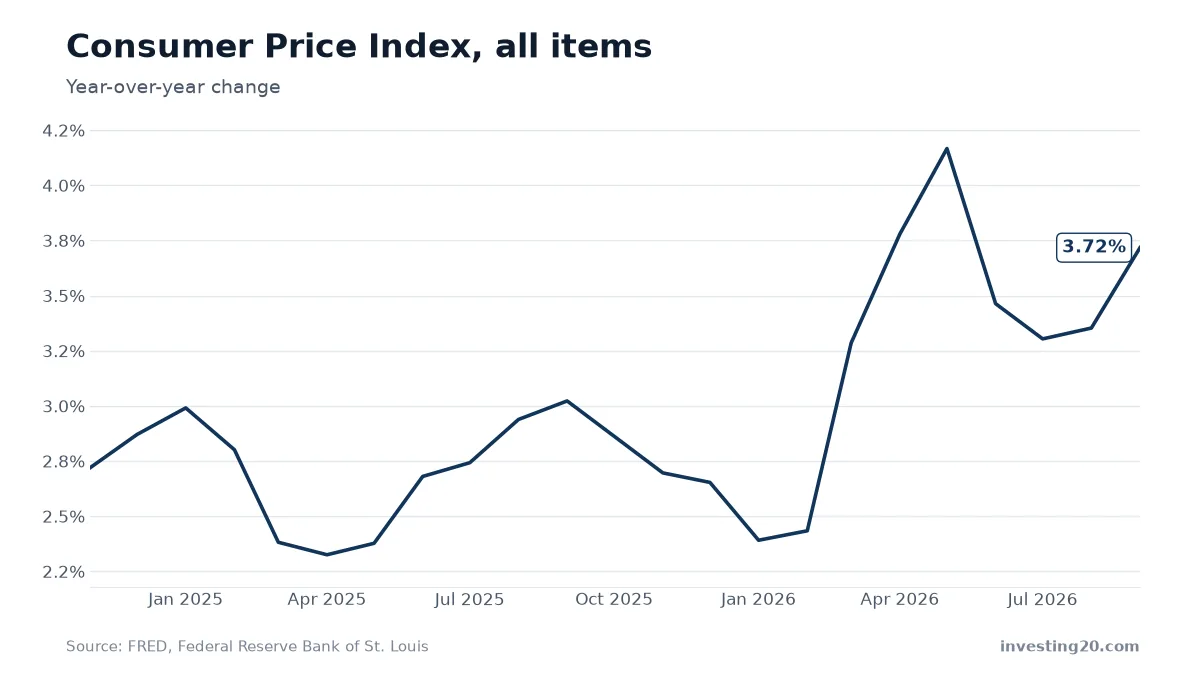
One quirk in this report: the BLS did not publish a year-over-year headline inflation rate for October. The federal government shutdown in October 2025 prevented the bureau from collecting sufficient data at that time, leaving no benchmark for an annual comparison. According to data from the St. Louis Fed, the latest available 12-month figure came in September 2026 at 3.72%, up from 3.35% in August. Inflation has now sat above the central bank’s 2% target for about five and a half years.
Why did consumer prices rise faster than expected?
A mix of housing expenses, grocery bills, and secondary energy shocks drove October’s numbers.
Shelter costs accounted for more than 30% of the total monthly increase, rising 0.3%. While Moody’s chief economist Mark Zandi noted that monthly shelter readings remain volatile and diverge somewhat from private market rent data, housing remains the single heaviest component inside the CPI basket.
Food costs accelerated 0.5% after staying flat in September. Shoppers saw price bumps across staples: snacks jumped 1%, beef climbed 0.9%, and the broader category for meats, poultry, fish, and eggs picked up 0.5%.
Economists point to several underlying engines keeping costs high:
- Energy and transportation pass-through: Even though oil prices dipped below $90 per barrel during trading and national retail gasoline dropped below $4 a gallon according to AAA, the October gasoline index still rose 1%. Transportation services jumped 0.8%, and airline fares climbed 0.4%. Economists noted that higher diesel costs from earlier in the autumn take three to six months to filter down to grocery shelves and distribution networks.
- The AI infrastructure buildout: Data center power consumption is starting to register on household utility bills. Electricity costs jumped 0.9% in October. Capital Economics noted that heavy enterprise demand for hardware has also created supply bottlenecks in basic consumer tech components like memory chips. That infrastructure spending has already generated volatility across tech balance sheets, a dynamic explored in our look at the AI tech stock selloff and debt fears.
- Tariff ripples: While President Donald Trump’s import duties showed a mild 0.1% increase in apparel, categories like furniture, appliances, and toys saw persistent pressure as retailers passed supply-chain costs along to buyers.
- Corporate pricing plans: Businesses are not planning to absorb these costs quietly. In the October National Federation of Independent Business survey, a net 37% of business owners said they plan to raise prices over the next three months, the highest share since July 2022.
How the Federal Reserve is responding
The Fed held its benchmark policy rate steady at a target range of 3.75% to 4% at its October meeting in a 10-2 vote. Federal Reserve data shows the effective federal funds rate sat at 3.88% on October 1, 2026. However, policymakers had already warned that a pause did not mean the tightening cycle was over.
Speaking in London ahead of the CPI release on Tuesday, Fed Governor Christopher Waller bluntly argued that an above-forecast core inflation reading should put a half-point increase on the table for the Fed’s December 8-9 meeting. Waller noted that hiking only 25 basis points would put the central bank’s credibility at risk.
Following the release, CME Group’s FedWatch tool showed traders fully pricing in at least a quarter-point increase in December, with odds of a 50-basis-point hike climbing to roughly 13% to 15%.
Other central bank leaders echoed that hawkish tone. Dallas Fed President Lorie Logan stated that she sees a need for two more quarter-point rate hikes before the Fed can consider pausing. Philadelphia Fed President Anna Paulson noted that despite signs that tariff effects may begin to fade, underlying inflation pressures remain firmly entrenched.
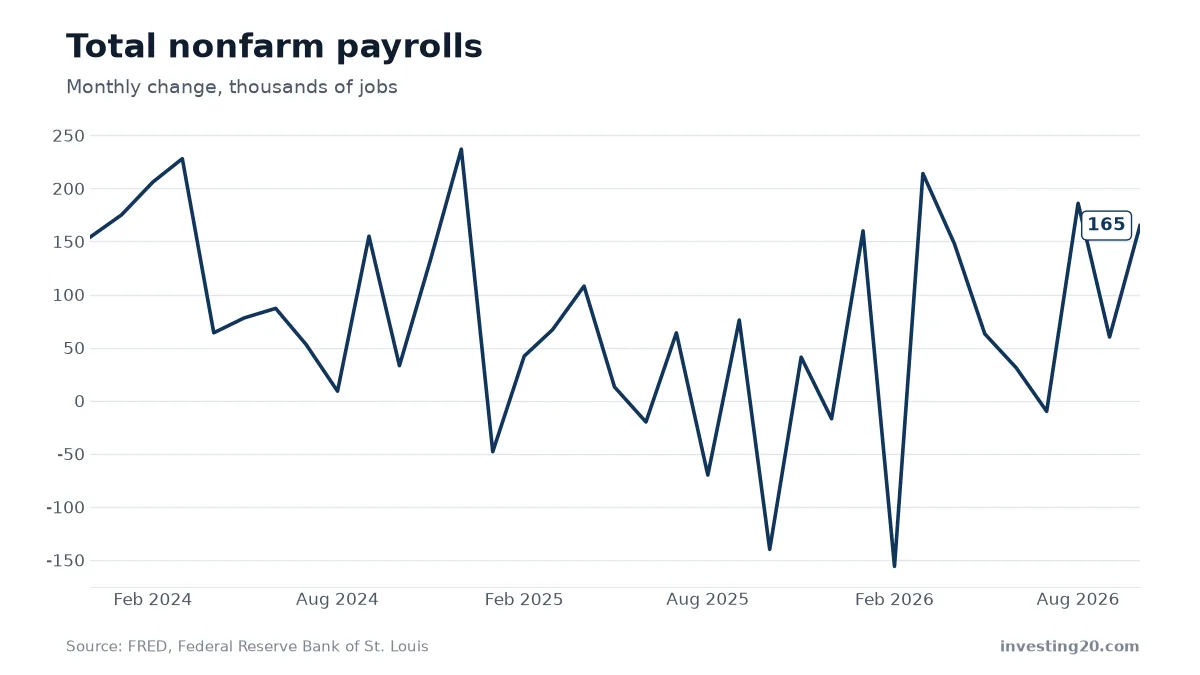
This sticky inflation comes right on the heels of strong jobs figures, which we covered when the October jobs report blew past forecasts. When resilient hiring pairs up with uncomfortably high prices, central bankers have little incentive to step off the brakes.
What this means for your money
When inflation stays hot and the Fed prepares to hike, financial conditions ripple through every corner of household finances.
1. Bonds and fixed income
Treasury yields spiked immediately after the CPI release. The 10-year Treasury note yield, which anchors standard retail financing costs from home mortgages to vehicle loans, jumped 13 basis points, briefly crossing above 5% before settling near 4.992%. The 2-year Treasury yield, which responds directly to near-term Fed policy changes, surged more than 18 basis points to 4.736%. A soft auction of $42 billion in 10-year notes compounded the drop in bond prices, leaving primary dealers holding 10% of the sale.
If you own broad bond funds or long-duration Treasuries, your holdings lost value on paper today because yields and prices move inversely. The flip side: new money deployed into short-term government paper or high-yield cash accounts continues to earn payouts not seen in years.
2. Stocks
Equities fell following the report. Growth and tech stocks face a double burden in this environment: higher discount rates compress their earnings multiples, while corporate borrowing costs eat into margins. If you want a refresher on how interest-rate decisions ripple through different equity sectors, read our breakdown on the Fed rate decision update.
Real estate investment trusts and dividend-heavy utilities also struggle when sovereign debt yields 5%, as conservative investors abandon equity yield plays for risk-free government paper.
3. Borrowing and loans
Long-term Treasury yields serve as the pricing baseline for consumer credit. With the 10-year yield hovering near 5%, 30-year fixed mortgage rates will remain elevated, keeping housing affordability strained. Auto loans and variable-rate credit cards will also see immediate upward pressure if the Fed delivers on a December rate hike.
What to watch next
The Fed does not make decisions based on a single data point, but time is running short before the December 8-9 meeting. Here is what will dictate whether the Fed moves by 25 basis points or opts for the larger 50-basis-point hike Waller floated:
- Producer Price Index (PPI): Wholesale inflation data arrives on Friday. If producer input prices show similar acceleration, it confirms that consumer price hikes have further to run.
- PCE Price Index: The Fed’s preferred gauge, the personal consumption expenditures index, will be released later in November. Central bank officials specifically cited this print as the definitive signal for their year-end decision.
- Geopolitical developments: Global crude oil prices fell slightly on Tuesday, with Brent crude dipping to $91.49 a barrel on hopes that the war with Iran might see diplomatic movement. Any escalation or resolution will quickly flow through to the November gasoline and energy readings.
For now, the era of higher-for-longer interest rates is extending into 2027. Avoid making panic-driven changes to a diversified long-term portfolio, but do not count on imminent interest-rate relief when budgeting for mortgages or carrying revolving debt.
FAQ
What did the October CPI report show?
Consumer prices rose 0.4% in October 2026, topping economists' forecasts of 0.3%. Core CPI, which excludes food and energy, rose 0.3% against expectations of 0.2%.
Why didn't the BLS release an annual inflation rate for October?
The Bureau of Labor Statistics could not publish an annual rate because a federal government shutdown in October 2025 halted data collection for that month, leaving no baseline for comparison.
Will the Federal Reserve raise interest rates in December?
Markets are heavily pricing in a quarter-point rate hike at the Fed's Dec. 8-9 meeting, with some officials like Governor Christopher Waller opening the door to a half-point increase if price pressures persist.
Sources: Consumer prices rose 0.4% in October, more than expected, complicating Fed’s inflation fight (CNBC); 10-year Treasury yield races back to 5% as inflation data, Waller comments drive rate hike expectations (CNBC); Hotter-than-expected inflation raises chances of Fed rate hike (CBS MoneyWatch); Fed Governor Waller sees December hike likely, opens door to possible half-point increase (CNBC); Here’s the inflation breakdown for October 2026 — in one chart (CNBC).
Economic data: FRED, Federal Reserve Bank of St. Louis
This article is for information only and is not investment advice. Do your own research before investing.