US Inflation Report: Why Fed Rate Cuts Are Off the Table
October PCE inflation climbed to 3.8%, cementing expectations for Fed rate hikes instead of cuts. Here is what it means for mortgages, stocks, and your cash.
On this page
If you were hoping the Federal Reserve would cut interest rates anytime soon to relieve your mortgage or credit card bills, today’s data ended that debate. Fresh numbers from the Bureau of Economic Analysis show annual inflation climbed to 3.8% in October, its highest level since May and almost double the Fed’s 2% target.
Instead of preparing for rate cuts, markets have now fully priced in another interest rate hike at the Fed’s December 9–10 meeting, according to the CME FedWatch Tool. Wall Street spent Wednesday in turmoil: the tech-heavy Nasdaq swung down over 4% in morning trading before closing down 0.6%, the S&P 500 dipped 0.25%, and spot gold dropped to $3,577.28 per ounce, touching its lowest level in over a year. Here is what the numbers actually show, why prices rebounded, and what this shifting rate path means for your portfolio, loans, and cash.
The inflation numbers that matter
The Commerce Department’s Personal Consumption Expenditures (PCE) price index, which is the Fed’s preferred inflation yardstick, rose 0.3% from September to October. That pushed the 12-month headline rate up to 3.8%, after sitting at 3.6% in September.
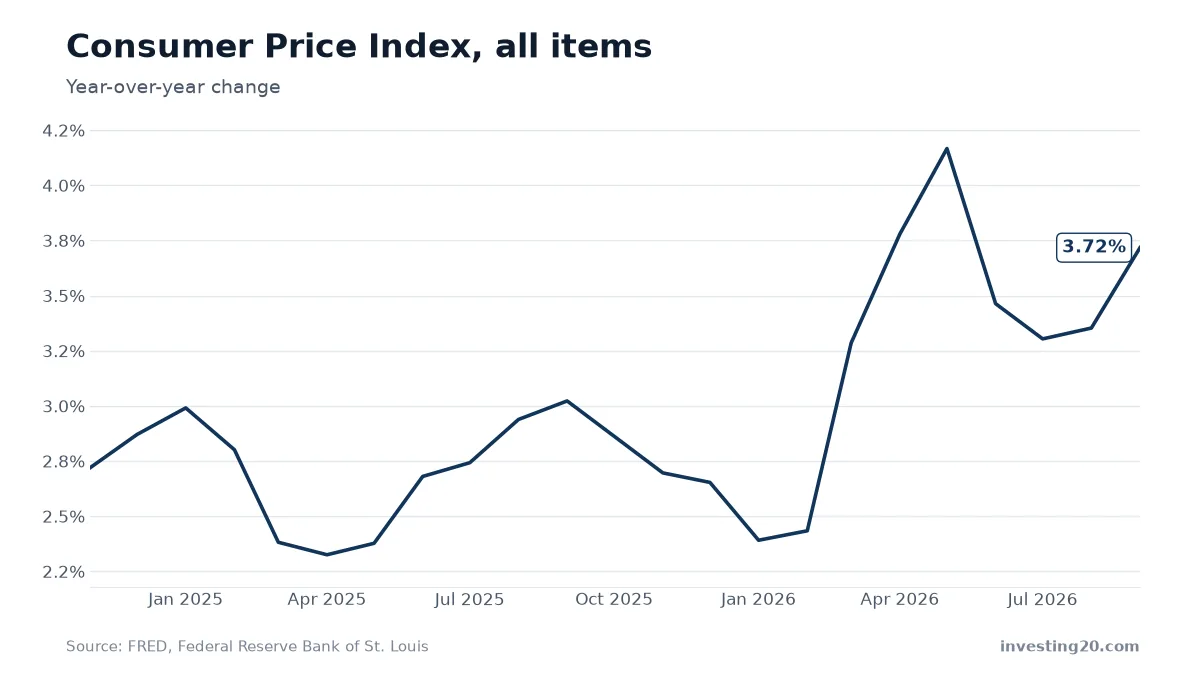
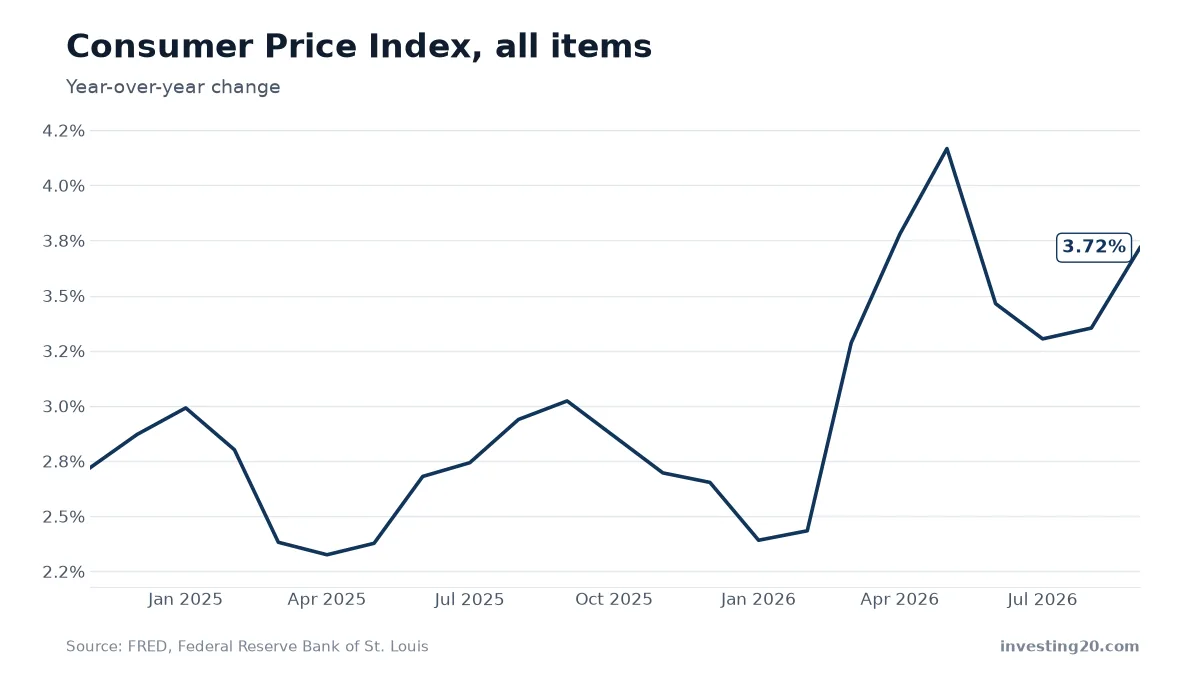
Separately, the Bureau of Labor Statistics reported that consumer prices rose 0.4% month-over-month in October, coming in hotter than economists anticipated. Data from the St. Louis Fed shows consumer prices were already accelerating into the autumn, with annual CPI at 3.72% in September, up from 3.35% in August.
Here is a quick look at where key price and rate indicators stand:
| Metric | Latest Reading | Prior Period | Source |
|---|---|---|---|
| Annual PCE Inflation | 3.8% (October) | 3.6% (September) | Bureau of Economic Analysis |
| Monthly PCE Change | +0.3% (October) | +0.5% (September) | Bureau of Economic Analysis |
| Monthly CPI Change | +0.4% (October) | Economists anticipated lower | Bureau of Labor Statistics |
| Third-Quarter GDP Growth | 4.3% annualized | 3.4% (previous estimate) | Bureau of Economic Analysis |
| Effective Federal Funds Rate | 3.88% (October) | 3.75% (September) | Federal Reserve (FRED) |
| Spot Gold Price | $3,577.28/oz | Touched sub-$3,500 intraday | Market data |
Why did inflation jump back up?
Inflation earlier in the year was driven heavily by energy costs, but the forces driving today’s prices run deeper into the broader economy.
Fuel costs have actually provided some relief at the pump: AAA figures show pump prices retreated from an early October peak of $4.41 per gallon down to $3.61 by the middle of November. Yet core demand refused to slow down. The Bureau of Economic Analysis sharply revised its third-quarter gross domestic product estimate up to a blistering 4.3% annual pace, up from its initial 3.4% estimate.
Large tech corporations are pouring massive sums into computer servers and facilities. Federal Reserve Bank of Chicago President Austan Goolsbee recently warned that the trillions flowing into server infrastructure have helped fuel price gains that are “borderline disturbingly high.” As HFE chief economist Carl B. Weinberg put it in a research note, “demand exceeding supply” has overheated the domestic economy.
On top of corporate spending, trade policy is adding pressure. The White House announced new import tariffs targeting 14 economies, including a 20% duty on Chinese goods and levies up to 35% on imports from Vietnam. Former Fed chairman Jerome Powell has pointed out that while tariffs cause one-off price changes, they lift short-term inflation expectations. The New York Fed’s October survey showed households already expect inflation to sit at 3.9% in a year, and 3.3% in three years. When consumers expect prices to rise, they demand higher wages, creating a cycle the Fed is desperate to halt.
What does this mean for interest rates and loans?
Anyone waiting for relief on borrowing costs will need to wait longer. Under Fed Chair Kevin Warsh, the central bank lifted its policy rate in September to a range of 3.75% to 4%, marking the first hike since July 2023. St. Louis Fed data shows the effective federal funds rate rose to 3.88% in October from 3.75% in September.
Minutes from the Fed’s late October meeting revealed that multiple policymakers warned that delaying further increases risked allowing inflation to become entrenched. With the December hike fully priced in by futures markets, and economists warning that additional hikes could arrive in early 2027, borrowing costs will stay high:
- Mortgage rates: Higher benchmark yields push mortgage rates up, keeping monthly payments elevated for prospective home buyers.
- Credit cards and auto loans: Variable-rate consumer debt adjusts higher almost immediately when the central bank hikes.
- Cash and savings: Yields on certificates of deposit and high-yield savings accounts should remain attractive, providing a reliable return on emergency funds.
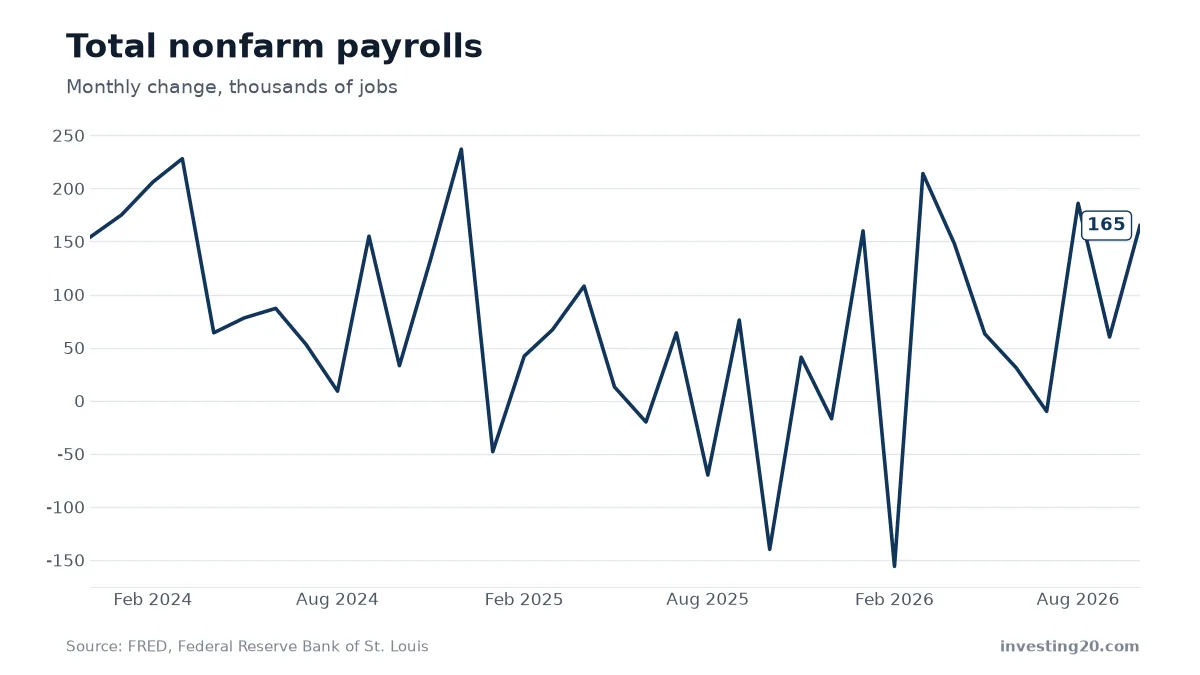
If you are tracking economic releases, our earlier look at the October jobs report showed just how strong underlying labor conditions have remained, supporting this higher-rate path.
How to handle your investment portfolio
Higher rates change the math for financial assets. When yields on safe cash rise, speculative assets lose some of their luster. Non-yielding assets take a hit, which is why spot gold fell below $3,500 an ounce intraday Wednesday for the first time since September 2025.
Stocks face pressure from two sides: more expensive corporate borrowing costs and doubts about corporate earnings. The S&P 500 is now roughly 8% below its October 6 high, bordering on a formal 10% correction.
Much of that pressure is concentrated in artificial intelligence. Tech leaders are spending aggressively, but investors are beginning to scrutinize the payoff. Anthropic, which listed last week at $83 a share in a record IPO, lost $104 billion over the first nine months of 2026 and plans to spend nearly $1 trillion on infrastructure through 2045. Meanwhile, Nvidia dropped 5% on Tuesday and another 4% on Wednesday.
If you are seeing red in your retirement accounts, here is how to frame it:
- Avoid panic selling: As Anthony Saglimbene of Ameriprise noted, fear can feed on itself during pullbacks. Selling out locks in losses and risks missing subsequent recoveries.
- Lean on earnings growth: Strong GDP growth means businesses are still generating revenue. Doug Beath of Wells Fargo Investment Institute expects solid corporate growth to support an S&P 500 year-end target of 8,700 for 2027.
- Revisit your asset balance: If you want a refresher on managing exposure across equities and cash, review our guide to investing 101. For earlier context on price trends, you can read our analysis of the October CPI report.
What to watch next
The next major event is the Federal Reserve’s policy meeting on December 9–10. All eyes will be on whether the board raises rates by a quarter point and what Chair Warsh signals about early 2027.
Between now and then, watch how the bond market reacts to incoming tariff implementations and keep an eye on holiday retail spending figures. If consumer spending stays as resilient as third-quarter GDP suggests, the Fed will have all the cover it needs to keep monetary policy tight well into next year.
FAQ
Why is the Fed unlikely to cut interest rates soon?
The annual PCE price index rose 3.8% in October 2026, remaining nearly double the Federal Reserve's 2% target. With the economy growing at a 4.3% pace in the third quarter, central bank officials are actively preparing to raise borrowing costs rather than cut them.
What caused the jump in the latest US inflation report?
The increase in consumer prices was pushed by an overheated economy fueled by heavy business spending on artificial intelligence infrastructure, alongside lingering energy price pressures. New tariff proposals on imports from major trade partners have also stoked expectations of higher future costs.
How does higher inflation affect mortgage rates and borrowing costs?
When inflation runs hot, the Federal Reserve lifts its benchmark rate to cool demand, which drives up borrowing costs for consumers. This directly raises the price of credit card balances, personal loans, and home mortgages.
Sources: US inflation hits highest since May after prices climb 3.8% over the last year (The Guardian); Gold falls to more than one-year low after data shows U.S. inflation rose further (CNBC); Why are investors freaking out even as the U.S. economy surges? (CBS MoneyWatch); The White House announced a raft of new tariffs on the same day inflation data came back at nearly twice the Fed’s target (Fortune).
Economic data: FRED, Federal Reserve Bank of St. Louis
This article is for information only and is not investment advice. Do your own research before investing.