AI Tech Stock Selloff: Why Debt Fears Sparked Wall Street's Slide
Tech stocks slumped as AI debt worries and rising bond yields hit neocloud firms like CoreWeave. Here is what the selloff means for your portfolio.
On this page
Tech stocks took a sharp hit on Friday as mounting debt across the artificial intelligence sector collided with stubbornly high bond yields. If your 401(k) or brokerage account holds standard tech index funds or high-flying semiconductor names, the sudden jump in market volatility shows why borrowing costs matter just as much as computing power.
The tech-heavy Nasdaq Composite dropped more than 650 points, or 2.4%, on October 16, 2026, sliding to 26,116 and locking in its first weekly decline in five weeks. The broader S&P 500 fell 1.2%, while the Dow Jones Industrial Average shed 0.6%. Behind the slide sits an uncomfortable reality that Wall Street spent months ignoring: the buildout of physical AI infrastructure requires tens of billions of dollars in borrowed cash, and bond markets are starting to push back.
Friday’s market moves at a glance
| Index / Asset | Friday Change | Level / Yield | Context |
|---|---|---|---|
| Nasdaq Composite | -2.4% | 26,116 | First weekly loss in five weeks |
| S&P 500 | -1.2% | ~7,651 (after 7,744 close Oct 15) | Pulled back from recent record levels |
| Dow Jones Industrial Average | -0.6% | — | Defensively outperforming tech |
| 10-Year U.S. Treasury Yield | Flat on day | 5.10% | Highest levels in over two decades |
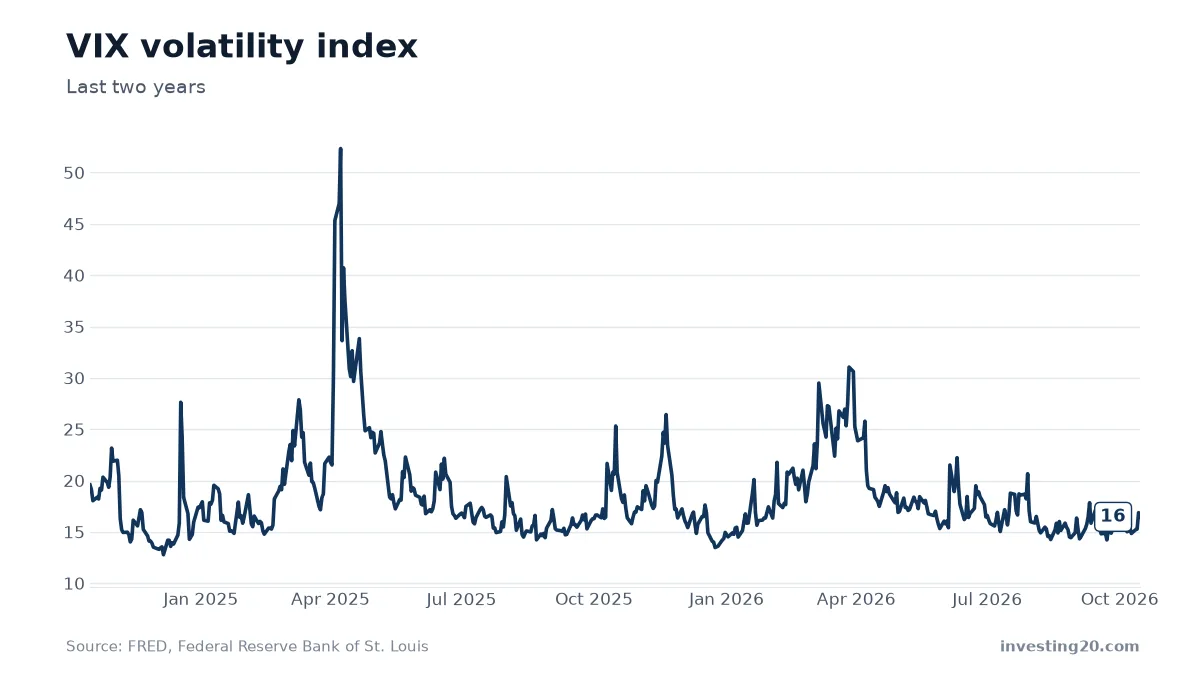
| Cboe Volatility Index (VIX) | Surged past 22 | >22.00 (from 16.46 Oct 15) | Four-month high |
| CoreWeave (CRWV) | -12% | — | Down nearly 26% on the week |
Where the debt pressure is building
The pressure point of Friday’s selloff is not the massive software giants, but the neocloud providers that supply the raw processing power to run complex models. Companies like CoreWeave have spent the past several years aggressively borrowing to purchase thousands of specialized chips and construct sprawling data centers.
CoreWeave has accumulated $51.6 billion in debt and obligations (about $46 billion net of cash) against a history of zero operating profitability, CNBC reported. When a company funds capital projects out of debt and new stock issuance rather than incoming cash flow, any bump in borrowing costs quickly threatens the entire business model. Vital Knowledge founder Adam Crisafulli explained to CBS News that these mounting balance sheet liabilities are stoking serious anxiety among equity investors.
Those credit strains spilled out into the open this week:
- CoreWeave shares tumbled 12% on Friday, bringing their weekly loss to nearly 26%.
- Yields on CoreWeave’s 9.75% bond due in 2031 climbed to 15.78%.
- Spreads on the company’s five-year credit default swaps (CDS), contracts used to insure against bond default, topped 1,140 basis points before settling near 1,038 basis points.
- Debt issued by the company as recently as June 2026 has already fallen 20% in market value.
A CDS spread above 1,000 basis points is widely considered by credit analysts, including S&P Global Market Intelligence, to reflect serious financial distress. As the Evercore ISI trading desk pointed out, credit markets are effectively saying “no mas” to AI debt that lacks operating cash flow support.
Why chipmakers and broader tech felt the sting
Credit trouble rarely stays contained in one corner of the market. When neocloud operators encounter funding roadblocks, their ability to keep buying hardware comes into question.
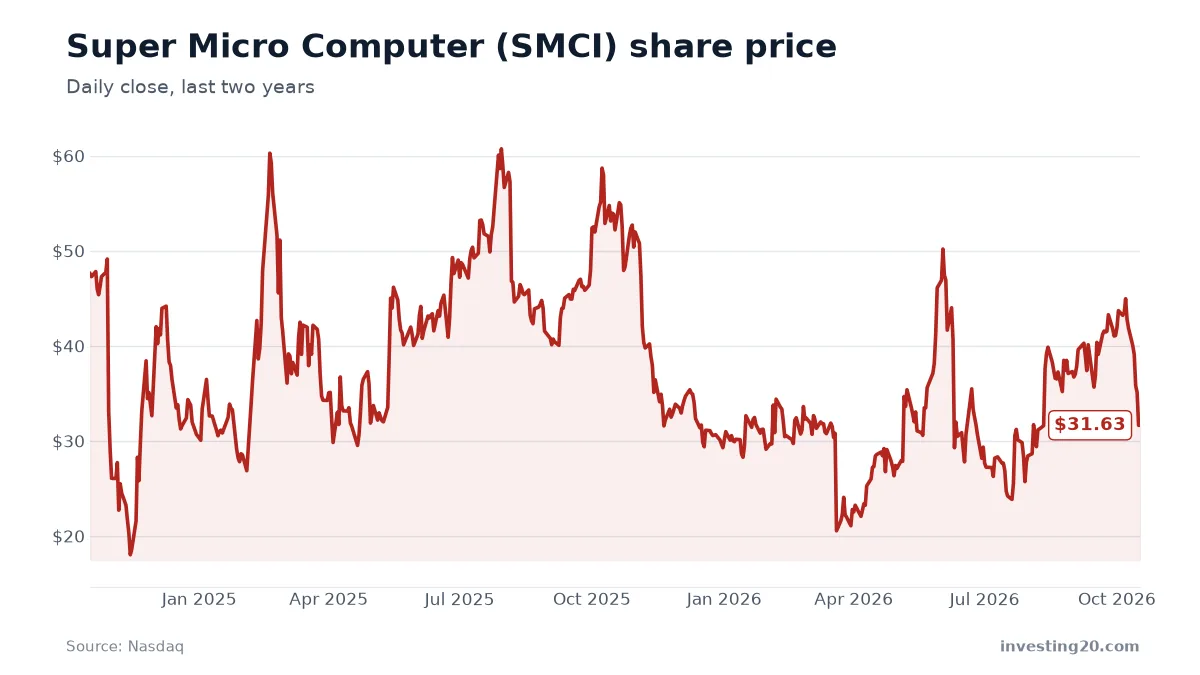
That dynamic quickly weighed on major chip producers. On Friday, Advanced Micro Devices slid 5.1%, Intel dropped 4.7%, Micron Technology declined 4.1%, and Broadcom fell 3.6%.
The selloff also reached electric vehicle maker Tesla, which slipped 2.8% on Friday after revealing a new Roadster concept capable of thrusting into the air, alongside broader equity pressure.
Not everyone sees a structural collapse ahead. CoreWeave CEO Mike Intrator defended the business in an internal memo, arguing that a backlog exceeding $100 billion, backed largely by investment-grade clients including Microsoft, Meta, IBM, and Caterpillar, more than covers debt obligations. High-profile backers have stepped in as well: Nvidia CEO Jensen Huang downplayed systemic issues, and ARK Investment purchased 192,000 shares of CoreWeave during the dip.
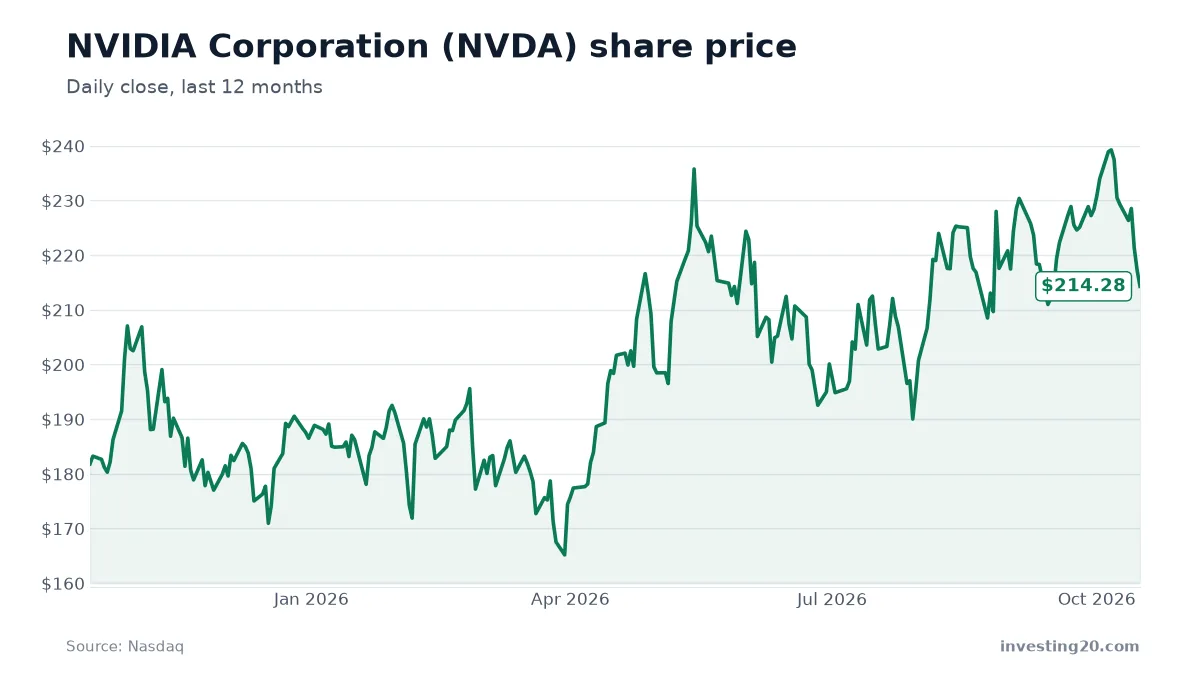
For established cash-generating leaders, balance sheets look completely different. NVIDIA generated $192.9 billion in net income over its last four reported quarters on $303.0 billion in revenue, trading at a price-to-earnings ratio of 26.8 with zero solvency concerns. Similarly, Microsoft posted $133.7 billion in net income for its fiscal year ending June 30, 2026.
The trouble isn’t whether hyperscale demand exists. The problem is whether the heavily indebted middlemen buying that hardware can bridge the gap until positive cash flow actually arrives.
The macro squeeze: 5.1% yields and a hawkish Fed
Tech stocks were already vulnerable because borrowing across the entire economy has grown expensive. Yields on the 10-year U.S. Treasury note held steady at 5.1% on Friday, remaining near their highest point in more than twenty years due to persistent inflation readings and heavy federal debt issuance.
When baseline risk-free yields sit above 5%, investors demand much higher returns to hold risky corporate debt or speculative growth stocks. Recent inflation prints have moved further away from the Federal Reserve’s 2% annual goal, raising the odds that the central bank will keep credit conditions tight.
The Fed raised its benchmark rate in September 2026 to a range between 3.75% and 4%, its highest rate since late 2025. While Fed Chairman Kevin Warsh shared no policy clues during a meeting in Bangkok on Friday, interest rate futures markets are adjusting rapidly. According to CME FedWatch data, the probability of an additional Fed rate hike at the December meeting jumped to 74.3%, up sharply from 50.2% a month earlier.
With benchmark rates elevated, high-yield corporate borrowers cannot simply refinance their obligations at cheap interest rates. Credit stress has even shown signs of touching investment-grade software operators; Oracle’s five-year CDS spread jumped roughly 10% this week to 282 basis points, raising questions about potential borrowing costs across the enterprise sector.
Fear gauge spikes: How options traders are positioned
The swift downturn caught many equity investors unprepared. Wall Street’s fear gauge, the Cboe Volatility Index (VIX), spiked above 22 on Friday for the first time in four months, up sharply from 16.46 just a day earlier, according to FRED economic data.
Derivative markets show institutions preparing for extended turbulence. Brent Kochuba, founder of SpotGamma, noted on CNBC that traders spent Friday actively monetizing October hedges and rolling into November contracts to protect against deeper pullbacks.
Among the top ten most active VIX contracts on Friday, nine were call options betting on higher volatility, representing nearly $27 million in traded premium. One trader alone spent $1.7 million on November 18 calls with a 20 strike, and another $1.1 million on 23-strike calls, wagering that the index will stay elevated late into next month.
What this means for your money
For everyday investors, a slide driven by debt and volatility requires perspective rather than panic. Here is how this dynamic touches your finances:
- Broad index funds: If you own standard S&P 500 or total market index funds, short-term chop is normal. The S&P 500 sat at 7,744 on October 15, well above its 6,735 level from a year ago. A 1% or 2% dip driven by neocloud debt does not derail a long-term retirement timeline.
- Tech concentration risk: If you hold individual shares in AI infrastructure companies that fund their growth with debt, heavy borrowing cuts both ways. In a capital-intensive environment, companies with high cash reserves weather 5% Treasury yields far better than companies relying on continuous bond offerings.
- Mortgages and consumer borrowing: The 10-year Treasury yield serves as the primary benchmark for 30-year fixed mortgages, auto financing, and consumer loans. With that yield frozen around 5.1%, consumer borrowing rates will remain restrictive for the foreseeable future.
- Cash and savings: While high yields create headaches for indebted companies, they continue to reward savers. Money market funds and short-term paper offer yields that haven’t been available for decades.
What to watch next
The coming two weeks will test whether this week’s drop was an isolated credit scare or the beginning of a broader tech repricing. The first signal arrives next week, when major quarterly earnings reports from Tesla, SpaceX, and Meta provide fresh data on corporate capital spending and infrastructure budgets.
Watch the 10-year Treasury yield around the 5.1% mark. If bond yields push higher following inflation headlines, high-multiple growth equities will face renewed valuation pressure.
Finally, track the Federal Reserve’s upcoming policy meeting on October 28-29. Even if policymakers hold rates steady this month, any commentary pointing toward a December rate hike will keep borrowing costs front and center for Wall Street.
FAQ
Why are tech stocks falling due to AI debt?
Investors are worried about the massive borrowing neocloud companies rely on to finance expensive data centers and chips without positive operating cash flows. Rising Treasury yields and credit distress at firms like CoreWeave have heightened fears that debt financing could dry up.
What happened to the VIX during the selloff?
Wall Street's primary fear gauge surged past 22 for the first time in four months on October 16, 2026. Heavy options buying signaled that traders expect elevated market volatility to continue into late November.
Will the Federal Reserve hike interest rates again?
The Fed lifted its benchmark rate to between 3.75% and 4% in September 2026. Following hotter inflation numbers, CME FedWatch data shows traders price in a 74.3% probability of another rate hike in December.
Sources: Tech stocks tumble as AI debt fears rattle Wall Street (CBS MoneyWatch); Wall Street’s fear gauge is ripping. Traders see it going even higher (CNBC); AI investors have woken up to the bond market’s warning signs (MarketWatch); The Austin Powers steamroller: How to trade CoreWeave’s slow moving crisis (CNBC); CoreWeave credit default swaps hit distress levels as investors sour on AI debt (CNBC).
Market data: Nasdaq; Economic data: FRED, Federal Reserve Bank of St. Louis
This article is for information only and is not investment advice. Do your own research before investing.