BitMine Immersion Technologies (BMNR) Stock Forecast 2026–2030
BitMine Immersion Technologies (BMNR) stock forecast through 2030. See financial results, 12-month analyst targets, and long-range valuation scenarios.
On this page
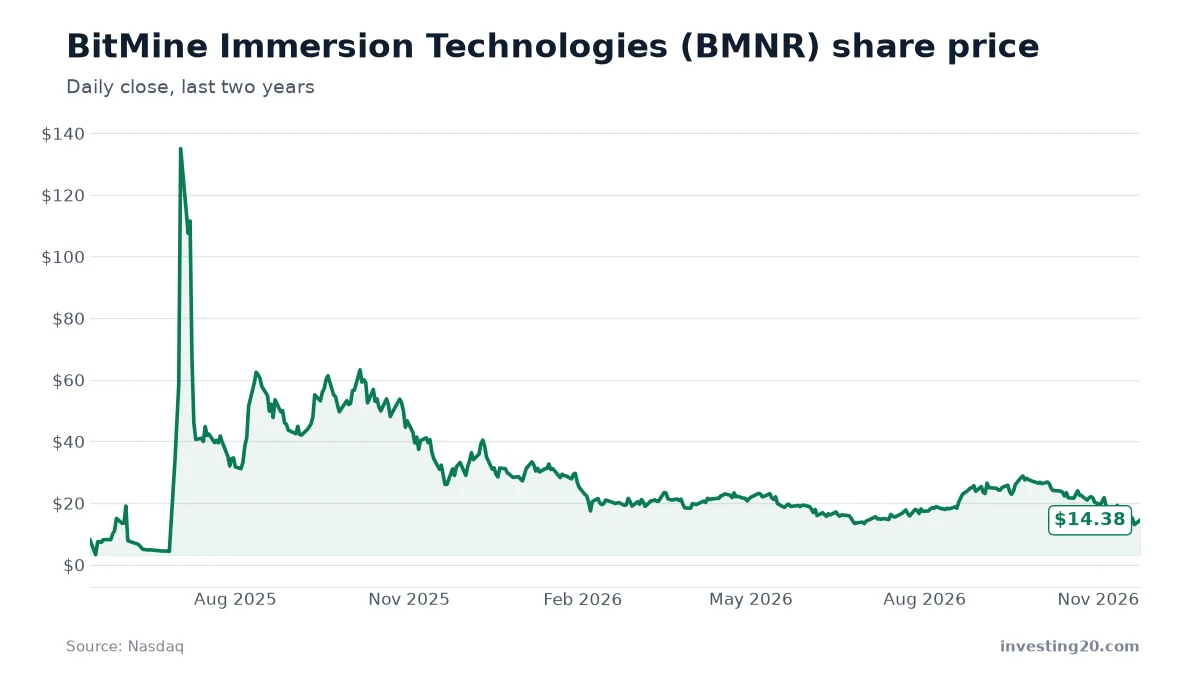
BitMine Immersion Technologies trades around $14.38, giving the blockchain infrastructure firm a market capitalization of $8.1 billion. The company has seen explosive top-line growth over the past year, but massive accounting losses and an aggressive valuation multiple leave investors with fundamental questions about its trajectory.
This article lays out a realistic BitMine Immersion Technologies (BMNR) stock forecast from 2026 through 2030. Rather than treating long-range targets as certain predictions, we use concrete business milestones and scenario analysis to show what the company must accomplish to reward shareholders at today’s prices.
| Share price | $14.38 (Nov 23, 2026 7:32 PM ET) |
| Market value | about $8.1 billion |
| 52-week range | $12.80 – $42.09 |
| Revenue, last 12 months | about $124.8 million |
| Revenue growth, last fiscal year | 1,948% |
| Net income, last 12 months | a loss of about $6.3 billion |
| Price-to-sales | about 65.0× |
| Price-to-earnings | n/a (not profitable) |
| Analyst 12-month target | average $45.30 (range $27 – $64); 2 buy, 0 hold, 0 sell |
Market data from Nasdaq as of November 23, 2026. Check current figures before making any decision.
What BitMine Immersion Technologies does
BitMine Immersion Technologies operates as a blockchain technology infrastructure firm listed on the New York Stock Exchange. The company focuses on three distinct areas: institutional digital asset staking and validation services, bitcoin mining, and strategic digital asset treasury management.
The company positions itself as an Ethereum Treasury company, holding digital assets on its balance sheet while seeking yield to back its liquidity and capital programs. A core piece of this strategy is MAVAN, an institutional staking and validation platform developed and deployed starting in 2025. Through MAVAN, BitMine earns recurring staking rewards and network validation fees from Ethereum operations.
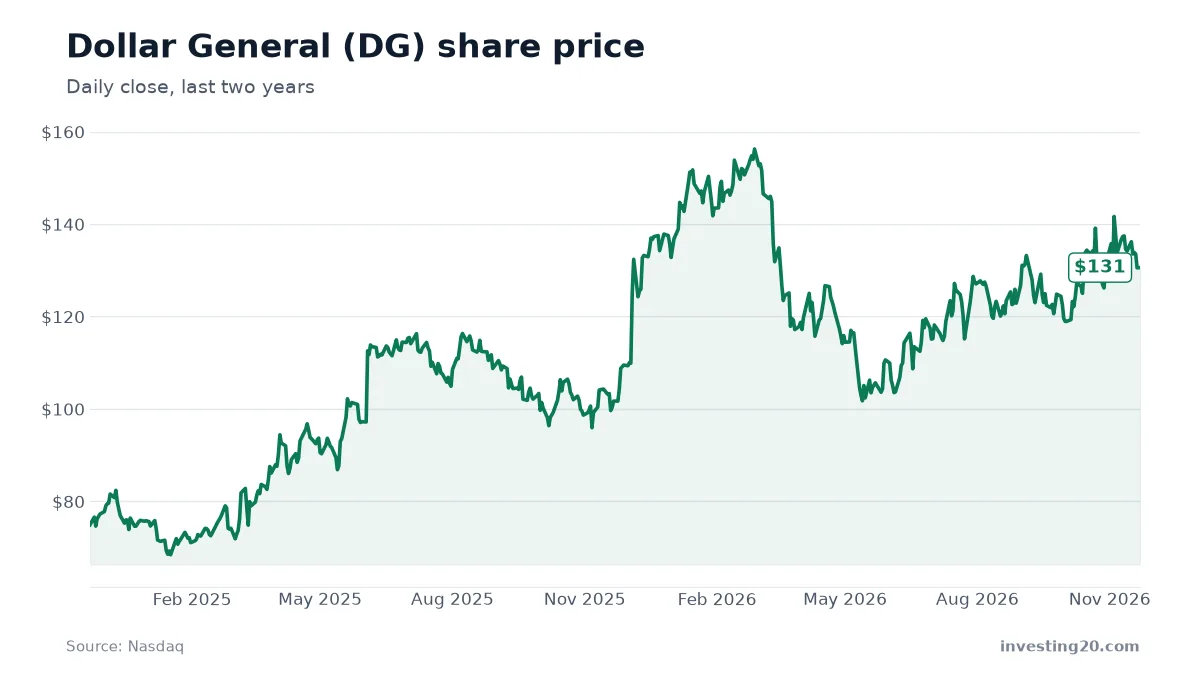
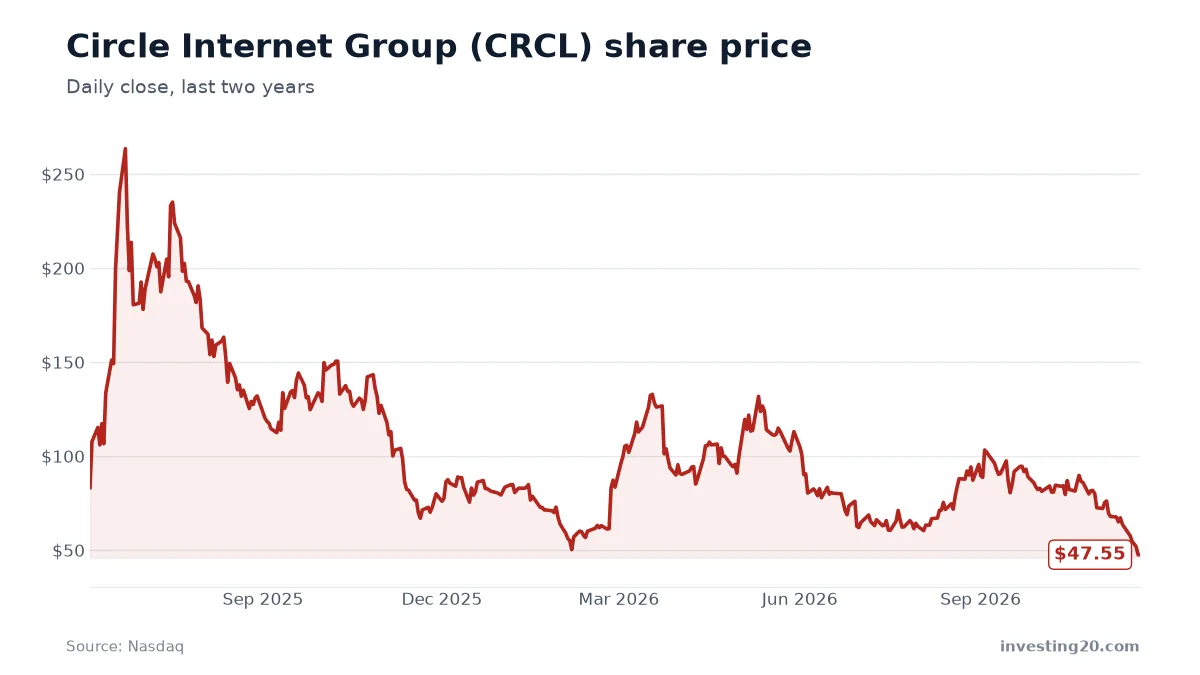
Alongside validation, BitMine runs traditional bitcoin mining rigs to generate digital assets directly. It then manages these holdings strategically, similar to other publicly traded treasury operators in the crypto sector like Hut 8 Corp. (HUT) or stablecoin-adjacent firms like Circle Internet Group (CRCL).
Where the business stands today
BitMine’s top-line revenue has expanded rapidly over the past three fiscal years. For the fiscal year ending August 31, 2024, revenue stood at just $3.3 million. That climbed to $6.1 million in fiscal 2025, before rocketing to $124.8 million for the fiscal year ending August 31, 2026. That represents a year-over-year revenue gain of 1,947.8%.
Recent quarterly numbers show the speed of that expansion:
- Quarter ending November 30, 2025: $2.29 million
- Quarter ending February 28, 2026: $11.04 million
- Quarter ending May 31, 2026: $46.53 million
- Quarter ending August 31, 2026: $64.94 million
Profitability, however, tells a much harsher story. While the company posted a net income of $348.6 million in fiscal 2025, it recorded a net loss of $6.3 billion for the fiscal year ending August 31, 2026.
Earnings per share have also swung erratically quarter to quarter. For the quarter ending May 31, 2026, BitMine reported EPS of -$0.13, missing the $0.07 consensus estimate. In the quarter ending August 31, 2026, BitMine reported EPS of $0.07, beating the $0.01 estimate by 600%. Consensus forecasts from analysts expect EPS of -$3.30 for fiscal 2027 before turning positive to $0.19 in fiscal 2028.
BMNR stock forecast for the next 12 months
Wall Street analysts hold an optimistic near-term view on the shares. Nasdaq consensus data shows two analysts covering the stock, with two buy ratings, zero holds, and zero sells.
The average 12-month price target is $45.30, representing an upside of 215.0% from the current price of $14.38. The low target sits at $27.00, while the high target sits at $63.60.
For the stock to hit those targets over the coming year, BitMine would need to demonstrate that its staking revenue through MAVAN can scale without expanding its net losses. It would also require stable or rising crypto asset prices to boost treasury valuations. The stock has been volatile historically, trading as low as $3.20 in May 2025 and as high as $135.00 in July 2025. Investors should keep in mind that analyst price targets cover only the next 12 months and often change when quarterly earnings swing unpredictably.
BMNR stock forecast for 2030: three scenarios
Looking toward 2030 requires projecting revenue growth, share dilution, and valuation multiples over several years. Today, BitMine trades at a price-to-sales multiple of roughly 65.0 based on its $124.8 million in trailing revenue. That is an exceptionally high multiple that will compress as the business matures, just as we see across fintech and high-growth firms like Robinhood Markets (HOOD).
To understand what is priced in, consider our break-even threshold: using our base-case assumptions of 599 million shares and a price-to-sales multiple of 10.0, BitMine needs roughly $861.7 million in revenue by 2030 just to support today’s $14.38 stock price.
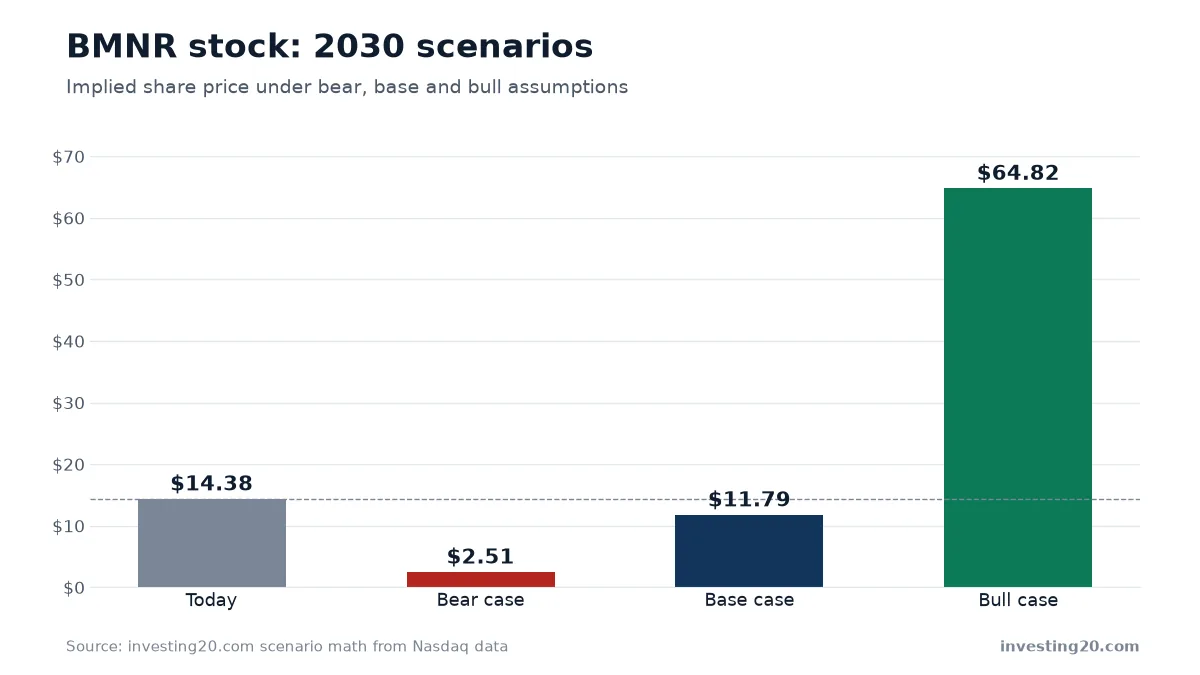
| Scenario | Revenue growth per year | 2030 revenue | Price-to-sales | Shares | Implied share price |
|---|---|---|---|---|---|
| Bear | 50% slowing to 5% | $318.5 million | 5.0× | 635 million | about $2.51 (-83%) |
| Base | 100% slowing to 15% | $706.3 million | 10.0× | 599 million | about $11.79 (-18%) |
| Bull | 200% slowing to 25% | $2.1 billion | 18.0× | 576 million | about $64.82 (+351%) |
The bear case
In this scenario, annual revenue growth slows quickly from 50% down to 5%, averaging about 26% annually through 2030. Revenue reaches $318.5 million. Growth stalls due to increased competition in institutional validation or reduced staking yields. The price-to-sales multiple drops to 5.0, and share count dilutes to 635 million. Under these conditions, the implied share price falls to $2.51, an 83% drop from today’s level.
The base case
Here, revenue growth starts at 100% and steps down gradually to 15% by 2030, averaging about 54% per year. Revenue reaches $706.3 million by 2030. The company solidifies its position with institutional clients on the MAVAN platform, though compression in staking margins keeps a lid on profitability. With the price-to-sales multiple falling to 10.0 and shares expanding to 599 million, the implied share price settles at $11.79, an 18% loss from today’s price.
The bull case
In the optimistic scenario, BitMine maintains rapid expansion, starting at 200% growth and slowing to 25%, averaging roughly 102% annually. By 2030, revenue hits $2.1 billion. The company becomes the dominant platform for institutional Ethereum staking and treasury yields. Investors reward this performance with a premium price-to-sales multiple of 18.0. Dilution is kept to 576 million shares. This yields an implied share price of $64.82, a gain of 351%.
The main takeaway
Even under the base case, where BitMine expands revenue by more than five times over four years, the stock produces a negative return. Today’s price-to-sales ratio of 65.0 leaves very little margin for error, meaning the market is already pricing in a scenario closer to the bull case.
Risks to weigh before investing
- Extremely high valuation multiple: Trading at 65.0 times sales means any deceleration in top-line growth could trigger severe multiple compression.
- Massive bottom-line losses: BitMine posted a net loss of $6.3 billion in fiscal 2026. Until the business establishes consistent profitability, ongoing operations present cash burn risks.
- Share dilution: High-growth infrastructure businesses frequently issue equity to finance hardware, expansion, and treasury reserves. Dilution reduces existing investors’ claim on future revenue.
- Crypto asset and network volatility: Revenue from validation, staking, and bitcoin mining fluctuates directly with underlying token prices, network difficulty, and staking yield rates.
- Analyst concentration: Only two Wall Street analysts currently publish price targets on the company, meaning consensus targets rest on a very small set of viewpoints.
What to watch next
If you are tracking BMNR stock, keep an eye on upcoming quarterly earnings reports to see if quarterly revenue continues its sequential climb above the $64.94 million reported for August 2026.
The metric that matters most is progress on profitability. Watch whether the consensus forecast of -$3.30 EPS for fiscal 2027 begins to narrow, and look for disclosures regarding adoption rates on the MAVAN staking platform. Sustained institutional volume will be the primary signal that BitMine can grow into its current valuation.
FAQ
What is the 12-month BMNR stock forecast?
Wall Street analysts tracked by Nasdaq have an average 12-month price target of $45.30 for BitMine Immersion Technologies, ranging from $27.00 to $63.60. Both analysts covering the stock rate it as a buy.
What does BitMine Immersion Technologies do?
BitMine Immersion Technologies is an institutional digital asset infrastructure company. It operates Ethereum staking and validation services through its MAVAN platform, runs bitcoin mining operations, and manages a strategic digital asset treasury.
Is BMNR stock profitable?
No, BitMine Immersion Technologies is not profitable over the last 12 months. For the fiscal year ending August 31, 2026, the company generated $124.8 million in revenue but reported a net loss of $6.3 billion.
Market data: Nasdaq. Financials: Nasdaq. Scenario math: investing20.
This article is for information only and is not investment advice. Do your own research before investing.