Walmart Earnings: Low Prices Defy Inflation Pressure
Walmart raised its full-year guidance and cut prices on 8,000 items despite high fuel costs. Here is what it means for your wallet and portfolio.
On this page
Walmart delivered stronger-than-expected third-quarter results on Thursday, raising its full-year forecast as grocery market share gains and surging online orders powered its business. Even as stubborn inflation and elevated transportation expenses weigh on household budgets, the retailer is actively cutting prices on everyday items to pull shoppers away from competitors.
For regular investors and shoppers, this earnings report offers a clear look at how the American consumer is holding up. Walmart’s push to keep shelf prices low despite diesel pressures highlights where retail dollars are migrating, while its raised profit outlook shows how scale can protect margins during choppy economic stretches.
Inside the third-quarter numbers
For the fiscal third quarter ended October 31, the company earned $4.95 billion, equivalent to 62 cents on a per-share basis, retreating from $6.14 billion, or 77 cents per share, in the prior-year period. Adjusted for investment moves, taxes, and reorganization costs, earnings reached 65 cents per share. Total revenue rose 5.2% year over year.
Walmart U.S. recorded net sales of $125 billion, a 3.6% gain from a year earlier, with comparable sales excluding fuel climbing 2.9%. Meanwhile, Sam’s Club generated $25.9 billion in net sales, marking a 10% jump driven by solid demand across groceries and general merchandise.
Digital convenience remains a major growth engine. Global e-commerce sales surged 17%, propelled by store-fulfilled pickup and delivery. Walmart U.S. e-commerce climbed 23%, Sam’s Club online orders rose 30%, and U.S. advertising revenue jumped 37%. Chief Financial Officer John David Rainey told CNBC that online gains stemmed directly from faster delivery times and lower prices, resulting in the chain’s largest grocery market share gains in three years.
Here is how the company raised its full-year guidance targets:
| Metric | Previous Full-Year Guidance | Updated Full-Year Guidance |
|---|---|---|
| Net Sales Growth | 4.0% to 5.0% | 4.9% to 5.2% |
| Adjusted EPS | $2.80 to $2.87 | $2.84 to $2.89 |
| Adjusted Operating Income Growth | 7.0% to 8.5% | 8.0% to 8.6% |
How is Walmart keeping prices low despite soaring fuel costs?
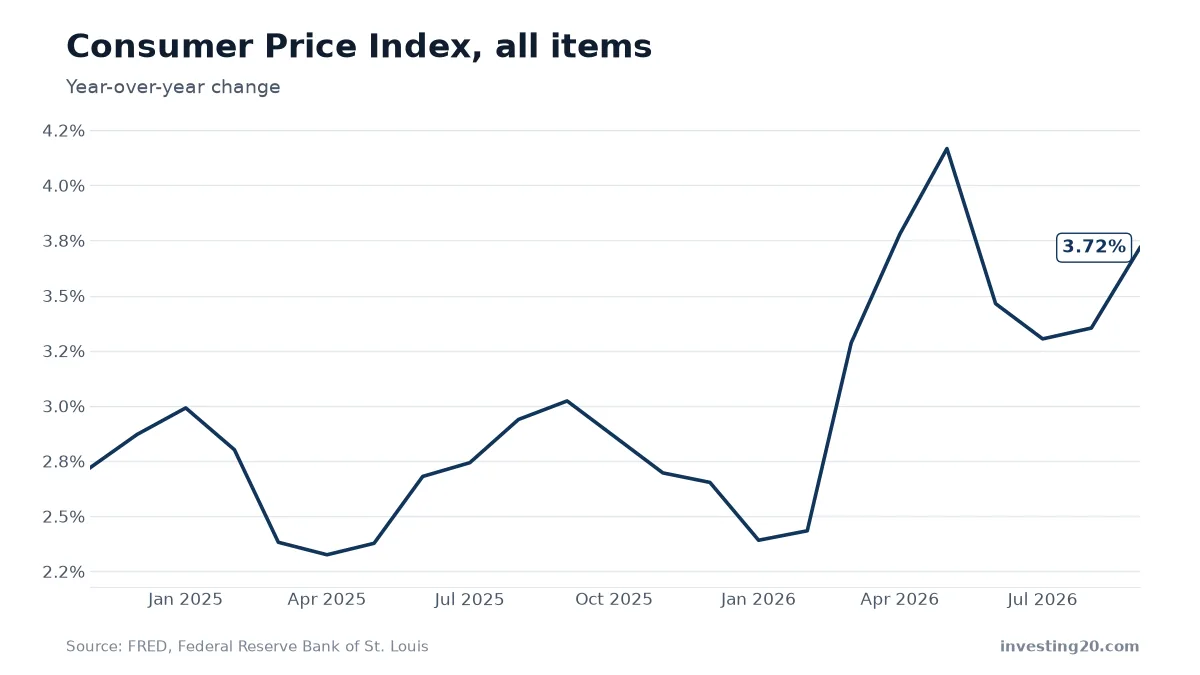
Keeping shelf prices down during an inflationary cycle is difficult, especially when freight costs spike. Data from the Federal Reserve Bank of St. Louis shows the Consumer Price Index rose 3.72% year over year in September 2026, up from 3.35% in August. Transportation inputs have added to that pressure.
CEO John Furner told CNBC that higher-than-expected diesel expenses have created headwinds for moving freight. “The reality is that increases in diesel fuel and transportation, they do work their way into cost of goods,” Furner said. “So we’re hoping to see these costs come down as soon as possible, and we’ll keep prices as low as we can.”
To counter those logistics expenses, Walmart utilized tariff refunds to offset input costs. That financial cushion gave the company room to roll back prices on nearly 8,000 products across its aisles, following earlier cuts on grocery staples such as beef. By absorbing part of the pinch through operational scale and administrative recoveries, the chain protects its core value proposition.
Technology is also playing a direct role in order sizes. Furner noted that Walmart’s artificial intelligence assistant, named Sparky, has increased customer basket sizes by an average of 40% ahead of the holidays by helping shoppers finish their lists. Much like investors evaluating algorithmic shifts in large holdings like the Apple (AAPL) Stock Forecast, retail giants are proving that software automation can drive real top-line improvements.
Doomsday pantries and the convenience shift
Beyond routine grocery shopping, consumer anxiety has nudged certain pantry-loading habits into the spotlight. CBS News reported that a wave of unrelated technical glitches affecting air travel, banking, and government networks prompted some shoppers to prepare for potential disruptions.
Circana data showed water germicidal tablet sales jumped 154% for the four weeks ending November 1, 2026, compared to last year. Disinfecting wipes rose 72%, while RBC Capital Markets tracked a 20% lift in moist towelette purchases. Walmart confirmed to RBC that it observed increased buying of shelf-stable goods such as canned soup and bottled water. While RBC analyst Steven Shemesh pointed out that emergency prep is not enough on its own to move the needle for giant chains, it underscores a nervous consumer base eager for practical security.
At the same time, Walmart is monetizing regular household routines through recurring memberships. In late October, the company launched a joint membership covering both Walmart+ and Sam’s Club. Furner told CNBC that the bundle brought roughly 2 million new members into Sam’s Club in just a few weeks. Global membership fee revenue climbed 17% in the third quarter, giving the retailer high-margin, predictable cash flow as customers consolidate their shopping errands.
What this means for your money and portfolio
The macroeconomic backdrop shows consumers are continuing to spend, even if they are selective. St. Louis Fed data shows total U.S. retail sales rose 6.82% year over year in October 2026, reaching a two-year high. However, the spending mix is heavily tilted toward discounters offering grocery relief.
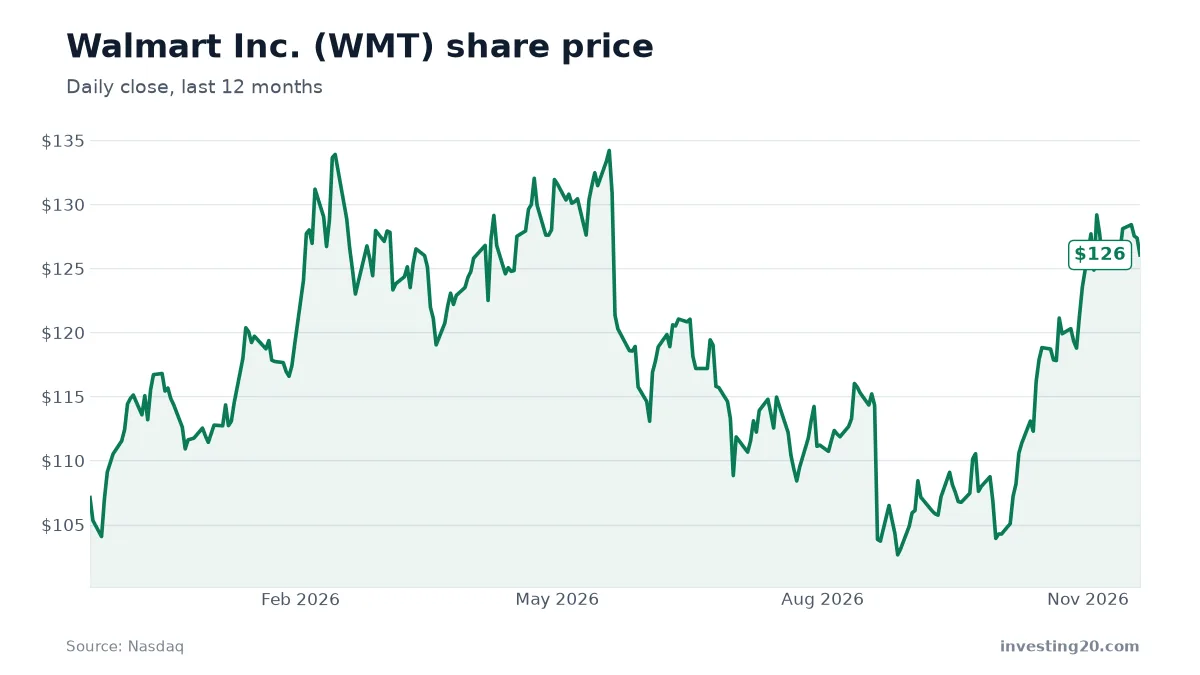
If you own shares of Walmart (WMT), the company’s defensive traits and market share expansion provide stability. The stock closed at $127.36 on November 18, 2026, up roughly 13% year to date and 17.7% over the past 12 months. With a market value of $1.0 trillion, Walmart trades at a price-to-earnings ratio of 45.3 based on its $22.1 billion in trailing net income, alongside a dividend yield of 0.78%.
Wall Street sentiment remains largely optimistic. Nasdaq consensus figures show 30 buy ratings, one hold, and zero sells, with an average 12-month price target of $133.43. While traditional retail rarely offers the volatile upside seen in fast-moving speculative plays like the Rocket Lab (RKLB) Stock Forecast or fintech turnarounds examined in the PayPal (PYPL) Stock Forecast, Walmart’s steady 4.9% to 5.2% sales projection offers defensive resilience.
For your monthly budget, Walmart’s pricing strategy is welcome news. When the nation’s largest retailer rolls back thousands of prices, grocery competitors often have to follow suit or surrender market share. If you are managing tight grocery lines, watching major big-box promotions can directly reduce your weekly food bills.
What to watch next
As the holiday shopping season ramps up, keep an eye on three specific developments:
- Freight and diesel movements: CFO John David Rainey noted that the fourth quarter is off to a solid start, but sustained transportation costs could test margins once temporary tariff refund offsets are exhausted.
- Holiday margin mix: Watch whether higher-margin categories like consumer electronics and apparel rebound, or if sales stay concentrated in lower-margin groceries and essentials.
- Joint membership retention: Monitor whether the 2 million shoppers who adopted the Walmart+ and Sam’s Club joint package continue paying for both ecosystems once introductory periods expire.
FAQ
Why did Walmart raise its full-year outlook?
Walmart lifted its sales and profit forecasts after reporting stronger-than-expected e-commerce growth and market share gains in groceries. The retailer now projects net sales to increase between 4.9% and 5.2% for the full fiscal year.
How is Walmart keeping prices low despite rising fuel costs?
CEO John Furner explained that while higher diesel and transportation costs pressure expenses, tariff refunds have helped offset these inputs. This has enabled the retailer to roll back prices on nearly 8,000 items across its stores.
How did Walmart's e-commerce and membership businesses perform?
Global e-commerce sales jumped 17% in the fiscal third quarter, led by a 23% increase at Walmart U.S. and 30% growth at Sam's Club U.S. Membership fee revenue also rose 17% globally, boosted by roughly 2 million new signups following the rollout of a joint Walmart+ and Sam's Club plan.
Sources: Walmart hikes outlook as CEO tells CNBC retailer aims to keep prices low despite soaring fuel costs (CNBC); Consumers stock doomsday pantries as tech outages cause jitters (CBS MoneyWatch).
Market data: Nasdaq; Economic data: FRED, Federal Reserve Bank of St. Louis
This article is for information only and is not investment advice. Do your own research before investing.