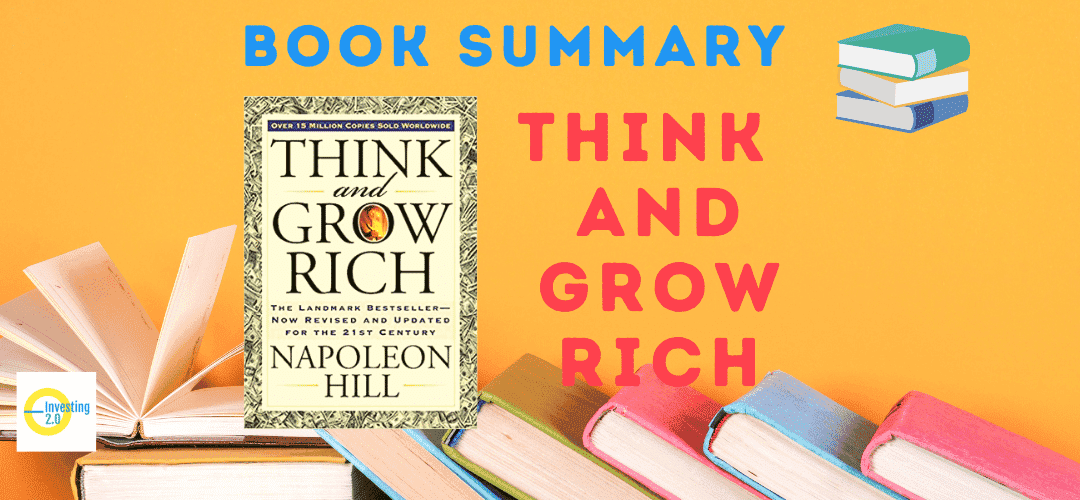
Think and Grow Rich Summary: The 13 Principles Explained
A summary of Think and Grow Rich by Napoleon Hill: the 13 principles, the secret at the center of the book, Hill’s six steps, the best quotes, and where the book falls short.
On this page
Updated October 3, 2026.
Some books are worth rereading because you take something new from them each time. Think and Grow Rich is one of mine. This summary covers the 13 principles, the idea at the center of the book, the six steps Hill gives for turning a goal into a plan, and where the book falls short.
What is Think and Grow Rich about?
Think and Grow Rich was written by Napoleon Hill and published in 1937, during the Great Depression. It is one of the best-selling self-help books of all time.
The argument is simple: what you achieve starts with what you think. A person with a definite goal, a strong desire to reach it, a plan, and the persistence to keep going will get further than a person with more talent and no direction.
Hill said the book grew out of years spent studying successful people of his time, among them Andrew Carnegie and Henry Ford. That backstory is disputed, and I come back to it below. The principles stand or fall on whether they work for you.
The 13 principles of Think and Grow Rich
- Desire. Every achievement starts with wanting something specific, and wanting it badly. A vague wish does not count.
- Faith. You have to believe you can reach the goal. Hill treats belief as something you build through repetition, not something you either have or lack.
- Autosuggestion. Repeat your goal to yourself, in writing and aloud, until it shapes how you think and act.
- Specialized knowledge. General knowledge does not make money. Knowledge organized toward a definite end does, and you can borrow it from other people.
- Imagination. Ideas are the starting point of every fortune. Use imagination to see the goal and the routes to it.
- Organized planning. Turn the desire into a concrete plan, and replace the plan when it fails instead of dropping the goal.
- Decision. Successful people decide quickly and change their minds slowly. Indecision is a habit, and so is its opposite.
- Persistence. Most people quit at the first setback. Sustained effort is what turns a plan into a result.
- The power of the master mind. Surround yourself with a small group of people who share knowledge and push each other forward.
- The mystery of sex transmutation. Hill’s term for channeling strong drives and emotions into creative work.
- The subconscious mind. What you repeatedly feed your mind, positive or negative, shapes your behavior without your noticing.
- The brain. Hill describes the mind as a sender and receiver of ideas, sharpened by the company you keep.
- The sixth sense. Intuition: the hunches that come after you have absorbed the other twelve principles.
The secret of Think and Grow Rich
Hill refers to a “secret” throughout the book and never states it in one sentence. Most readers settle on the same answer: a burning desire for a definite goal, held with belief.
Everything else in the book serves that idea. Faith and autosuggestion keep the desire alive. Planning, decision and persistence turn it into action. The master mind supplies the knowledge and support you do not have on your own.
Hill’s six steps for turning desire into money
The most practical part of the book is in the first chapter. Hill gives six steps:
- Fix in your mind the exact amount of money you want.
- Decide exactly what you will give in return for it.
- Set a definite date by which you intend to have it.
- Make a definite plan and start on it at once, whether or not you feel ready.
- Write all of this down as a clear statement.
- Read the statement aloud twice a day, morning and night.
Swap “money” for any goal and the method still works. It forces a vague wish into a specific target with a deadline and a first step.
The six fears
The last chapter names six fears that hold people back: poverty, criticism, ill health, loss of love, old age and death. Hill’s point is that indecision turns into doubt and doubt turns into fear, so the cure is to make a decision and act on it.
Quotes from Think and Grow Rich
“Whatever the mind of man can conceive and believe, it can achieve.”
“The starting point of all achievement is desire. Keep this constantly in mind. Weak desires bring weak results, just as a small fire makes a small amount of heat.”
“You are the master of your destiny. You can influence, direct and control your own environment. You can make your life what you want it to be.”
“Success comes to those who become success conscious. Failure comes to those who indifferently allow themselves to become failure conscious.”
“There is one quality which one must possess to win, and that is definiteness of purpose, the knowledge of what one wants, and a burning desire to possess it.”
“Thoughts are things, and powerful things at that, when they are mixed with definiteness of purpose, persistence, and a burning desire for their translation into riches, or other material objects.”
Where the book falls short
- The backstory is shaky. Hill said Andrew Carnegie set him the task of studying successful people. Historians have found no independent record of that, so read the anecdotes as stories.
- It is not evidence. The book offers examples of people who succeeded and says little about the people who followed the same steps and did not.
- Some chapters have aged. The sections on sex transmutation and the sixth sense read as mysticism today. Most readers take the first eight or nine principles and leave the rest.
None of that cancels the useful core: set a specific goal, write it down, make a plan, find people who will hold you to it, and do not quit early.
Book, Kindle and audiobook
If you want to read it, the original 1937 text is the version to get. I like the audiobook most; it suits a long walk.
As an Amazon Associate, Investing 2.0 earns from qualifying purchases.
The Think and Grow Rich film
The best-known screen adaptation is Think and Grow Rich: The Legacy, a 2017 docudrama. It mixes re-enactments of Hill’s story with interviews with entrepreneurs who credit the book for their start.
Also read: Lessons from Rich Dad Poor Dad
FAQ
What are the 13 principles of Think and Grow Rich?
Desire, faith, autosuggestion, specialized knowledge, imagination, organized planning, decision, persistence, the power of the master mind, the mystery of sex transmutation, the subconscious mind, the brain, and the sixth sense.
What is the main message of Think and Grow Rich?
That success starts with a definite goal and a burning desire to reach it. Hill argues that a clear aim, held with belief and backed by a plan and persistence, is what separates people who achieve their goals from people who give up.
Is Think and Grow Rich just about money?
No. The book talks about money because it was written during the Great Depression, but the principles apply to any goal: a career, a business, a skill or a personal change.
Is Think and Grow Rich true?
Treat it as motivation, not research. Hill said the book came from decades of studying successful people, but historians have found no independent record of some of the meetings he described, including his account of Andrew Carnegie. The ideas about goals, planning and persistence are useful on their own merits.
What is the master mind in Think and Grow Rich?
A master mind is a small group of people who meet regularly to share knowledge and hold each other to their goals. Hill argues that no one succeeds alone and that a good group produces ideas none of its members would reach individually.
Which edition of Think and Grow Rich is best?
The original 1937 text is the one most readers recommend. Later editions were revised and shortened, so look for a copy labeled as the original or unabridged version.
Final thoughts
Think and Grow Rich is closer to a pep talk than a manual, and it works best when you treat it that way. Take the six steps, write your goal down, and judge the book by whether it gets you moving.
Questions? Use the contact form or email [email protected].